
Pet First Aid Basics: A Guide for Every Owner
As a pet owner, it’s essential to be prepared for the unexpected. Knowing how to administer basic Pet First Aid Basics can make all the difference in an emergency, and having a well-stocked first aid kit on hand is a crucial step. This guide will walk you through the essential items for your kit and what to do in some common emergencies.

Building Your Pet First Aid Kit
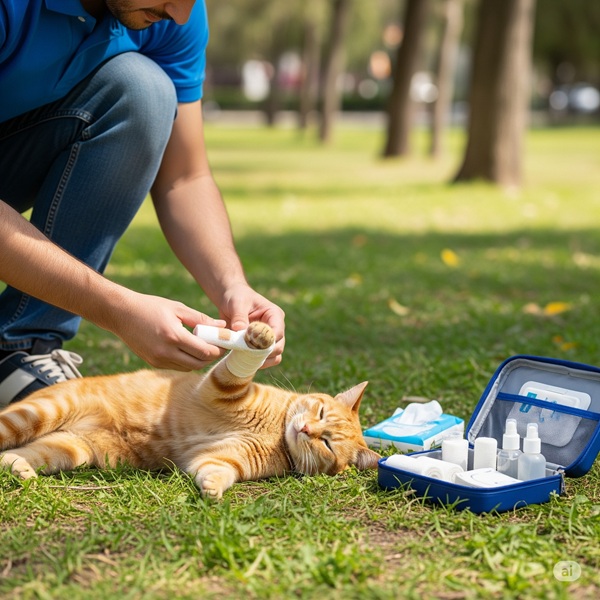
A pet first aid kit is similar to a human one, but with a few specific additions for our furry friends. To start with, you can buy pre-made kits, or, as an alternative, you can assemble your own.
Essential Items:
- Sterile Gauze Pads and Rolls: For covering wounds and controlling bleeding.
- Adhesive Tape: To secure bandages.
- Antiseptic Wipes or Solution: Such as chlorhexidine or povidone-iodine, for cleaning wounds.
- Blunt-Ended Scissors: For cutting bandages or tape.
- Tweezers: To remove splinters or ticks.
- Digital Thermometer: To check your pet’s temperature. A normal temperature for a dog or cat is between 37.8°C and 39.2°C.
- Disposable Gloves: To protect yourself and maintain hygiene.
- Pet-Specific Ointment: Ask your vet for a recommended antibiotic ointment.
- Towel or Blanket: To use as a muzzle, a stretcher, or to keep your pet warm.
- Emergency Contact Information: Your vet’s number, the number of the nearest out-of-hours animal hospital, and a poison control hotline.
What to Do in Common Emergencies
Cuts and Scrapes
- Initial Response: First and foremost, stay calm. Your pet will pick up on your stress, so a calm approach is vital. Next, if there is bleeding, you need to control it. To do this, apply gentle but firm pressure with a clean cloth or gauze pad. In the case of severe or unstoppable bleeding, apply a pressure bandage and seek veterinary care immediately.
- Cleaning and Bandaging: Once the bleeding has stopped, gently clean the wound with an antiseptic solution or wipes. However, you should avoid using hydrogen peroxide, as it can damage tissue. Afterwards, apply a fresh gauze pad and secure it with a bandage roll and adhesive tape. Be careful not to wrap it too tightly. Even so, it’s important to seek veterinary advice. Even minor cuts can become infected, therefore it is always best to have a vet check a wound to ensure proper healing.
Stings and Allergic Reactions
- Immediate Action: If possible, try to identify the source of the sting. Then, remove the stinger with tweezers or the edge of a credit card. Be careful not to squeeze it, since this can release more venom. To help with swelling and pain, apply a cold compress to the area.
- Monitoring and Care: In addition, you must monitor for signs of an allergic reaction, such as facial swelling, hives, difficulty breathing, or excessive scratching. If your vet has previously prescribed an antihistamine for your pet, you can give it to them, but only under their guidance. Furthermore, if your pet shows any signs of a severe allergic reaction, get them to a vet straight away.
Choking
- Assess the Situation: If your pet is choking, they may be gagging, pawing at their mouth, or have difficulty breathing. Consequently, you must act quickly.
- Attempt to Clear the Obstruction: If you can see the object and can safely remove it, do so carefully with your fingers or a pair of tweezers. Be cautious not to push it further down. Alternatively, you can perform the ‘Heimlich’ manoeuvre if necessary. This should, however, only be attempted if you are confident and know the correct technique for your pet’s size. It involves a series of abdominal thrusts to dislodge the object.
- Seek Immediate Veterinary Care: Therefore, if you cannot dislodge the object, or if your pet’s breathing is severely impaired, go to the vet immediately.
Remember, this guide is for basic first aid. It is not a substitute for professional veterinary care. In any emergency, it’s always best to contact your vet or the nearest animal hospital for advice. By being prepared, you can help ensure your beloved pet is as safe as possible.